
Long term performance of the pipes and its quality play a major role when it comes to building drainage networks, reliable water supply systems, industrial pipelines and even in irrigation projects. The High-Density Polyethylene (HDPE) pipes are broadly recognized for their durability, flexibility, and their corrosion resistance. If poor quality materials are used then the best installation techniques cannot even compensate.
Inspection of the pipes carefully is important before starting any HDPE pipe installation. A detailed quality check helps in reducing leaks, any other structural failures, repairs that are costlier, and even the project delays.
Why the HDPE Pipe Quality Matters
HDPE pipes are mainly designed to bear demanding environmental conditions, including the underground installations, chemical exposure, and with varying pressure levels. Installing damaged or substandard pipes may lead to premature failures, increase in maintenance costs, and even interruptions to the essential services.
Ensuring the quality of every pipe before installation, you make sure that your HDPE piping system performs efficiently until its expected service life. Here are some facts that you should keep in mind before installing.
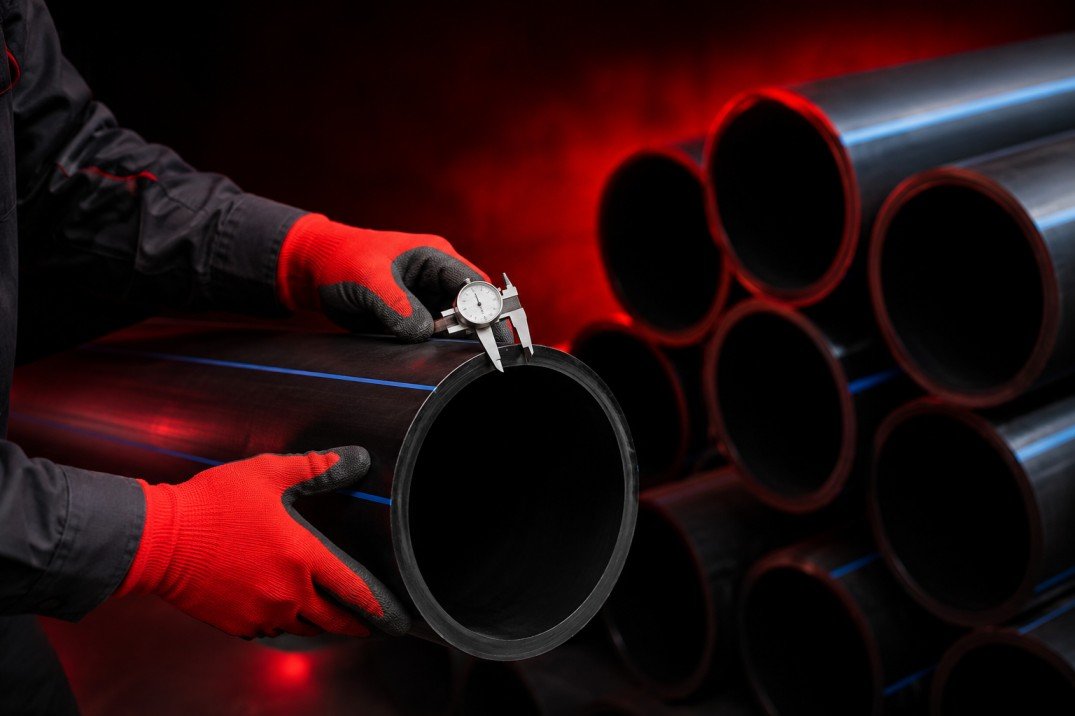
Inspect the Pipe Surface for Visible Defects
The first step for a quality inspection is careful visual examination.
Find for any:
- Splits or cracks
- Deep cuts or any surface scratches
- Deformation or damaged sections
- Any fade in colours
- Contamination signs
Quality of pipes should be based on the surface which should be uniform, smoothness they have and overall colour over the surface should be consistent.
Review Dimensions and Wall Thickness
Correct dimensions are important for proper installation and long-term performance.
To know the accuracy, measure the following:
- Outer diameter of the pipe
- Wall thickness
- Length of pipe
- Roundness of the pipe
The project specifications and manufacturing standards should be match to the measurements. Wall thickness is inconsistent then it may indicate poor manufacturing quality and can even affect the pipe’s pressure-bearing capacity.
Confirm the Material Grade
All polyethylene materials may not offer the same level of performance. High-quality HDPE pipes are manufactured using certified raw materials that should always meet international standards.
Inspect Quality Certifications
Proven manufacturers maintain strict quality control everywhere in production. Before installation, try to request documentation such as:
- Certificates of material test
- Reports on factory inspection
- Records on quality assurance
- Compatibility with relevant international standards
To make sure of better productivity and a consistent after service support we need to trust the best HDPE Pipe Installation Companies in UAE who will surely help with the complete process from the start to end.
Inspect the Pipe Ends
Ends of pipe should be clean, smooth, and perfectly cut. Check for
- Irregular edges
- Cracks
- Distortion
Damaged pipe ends can create problems during butt fusion and electrofusion welding, and may increase the risk of joint failure.
Make Sure of Proper Storage Before Installation
Incorrect storage may even damage premium-quality pipes. Better storage practices include:
- Pipes are kept on a flat surface
- Excessive stacking should be avoided
- Pipes need to be protected from sharp objects
- During outdoor storage, pipes should be covered
Check Compatibility with HDPE Pipe Fittings
Entire pipeline performance depends not only on the pipes but also its fittings. Ensure that all HDPE pipe fittings:
- Match with the pipe diameter
- Meet the pressure rating
- Should be manufactured from compatible HDPE material
- Should have no visible defects
Mismatch in fittings may affect the reliability of the system.
Pressure and Quality Testing should be Done
Testing should be done for major projects or any industrial projects before its installation. Common HDPE pipe testing methods include:
- Testing of Hydrostatic pressure
- Dimensional inspection
- Density testing
- Melt flow index testing
- Visual quality inspection
Any test that are performed to verify the pipes will surely help to meet the requirement and this should be done to ensure the quality before becoming the part of pipeline network.
Always Purchase from a well Established Supplier
Best way to ensure quality is to collect materials from an experienced and reliable supplier. Professional supplier will offer:
- Products that are certified
- Better manufacturing quality
- Technical support
- Product documentation
- Credible delivery schedules
To reduces installation risks and long-term maintenance costs select quality products from the beginning significantly.
Common Mistakes we need to Avoid
Many of the installation problems occur because basic inspections are not considered important. Avoid these common mistakes:
- Accepting the pipes without inspection
- Ignoring damaged surfaces
- Different pressure ratings are mixed
- Using incompatible fittings
- Storing pipes improperly
A few minutes spent for inspecting materials can prevent major issues after installation.
To have good and better pipe installation, it should begin when the first pipe is laid. Cautious inspection of quality of the pipes, its dimensions, grade of material, certifications it has and fittings helps us to ensure a durable and leak-free pipeline system.